
Brussels, 11 March 2026
After many months of consultation of civil society, the European Commission presented its first “Intergenerational Fairness Strategy” (see full text on the link) on Thursday 5 March 2026 in Brussels.
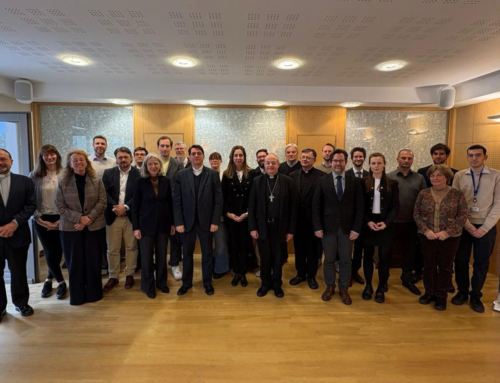
Since its inception of office as Intergeneration Fairness Commissioner, M. Glenn Micallef had assured that representatives from the civil society would not only be consulted, but also would have their word in the conception of this Strategy. FAFCE took part in many meetings, both online and in presential mode, to exchange ideas with members of the Commissioner’s cabinet and other NGOs. On a dedicated portal, FAFCE Members associations were also invited to send their contributions regarding solidarity between generations.
All this work was compiled to publish the first “Intergenerational Fairness Strategy” of the European Commission, which was presented publicly on Thursday 5 March 2026 in Brussels.
This Strategy “expresses the European Commission’s ambition to ensure that today’s choices contribute positively to tomorrow’s opportunities, and that both benefits and responsibilities are shared fairly across age groups.” As the demographic imbalances are hitting hard our continent, the younger generations will have to pay the price for the older parts of society. Something the European Commission wants to mitigate with this Strategy.
As frequently underlined by FAFCE, the demographic winter is putting our democraties at risk : “The cost of non-action on intergenerational fairness is therefore not only economic; it is also democratic, social and environmental” rightfully underlines the Strategy.
Among the different propositions, the Commission launches the idea to “Organise a Demography Forum as a place for exchange and mutual learning on addressing demographic developments.” The suggestion of an EU-wide dialogue regarding demographic challenges is an old idea of FAFCE, starting from its Board Meeting Resolution for a Demographic Spring in 2019.