European Institutions
In this page we will display all the activities done in the framework of the European institutions which affects directly or indirectly all families in Europe.
Resolution (93) 38 on relations between the Council of Europe and Non – Governmental Organisations (1993)
Resolution (2003) 9 Status of partnership between the Council of Europe and Non – Governmental Organisations (2003)

FAFCE welcomes EU Parliament debate on Ageing
Brussels, 15th March 2024 FAFCE warmly welcomes the debate on ageing which took place on Thursday 14th March at the European Parliament. MEPs highlighted the challenges of the demographic winter in Europe, which was

FAFCE responds to Energy Performance of Buildings Directive
Brussels, 15th March 2024 On Tuesday, MEPs adopted a new Energy Performance of Buildings Directive. The plans, agreed on by the Council, aim to make the EU building sector carbon neutral by 2050. The

FAFCE welcomes resolution to create an annual designation of European Capitals of Children
Brussels, 15th March 2024 FAFCE welcomes the resolution on the creation of a European initiative for an annual designation of European Capitals of Children. The resolution was passed by the European Parliament yesterday. The
FAFCE comment on the Inclusion of the right to abortion in the EU Charter of Fundamental Rights
Brussels, 15th March 2024 Yesterday the European Parliament debated the Inclusion of the right to abortion in the EU Charter of Fundamental Rights. This debate comes less than a week after President Macron enshrined

FAFCE statement on France’s constitutional inclusion of abortion
Brussels, 13th March 2024 Last week, France became the only country today to enshrine the "fundamental liberty" to an abortion. This week, President Macron announced a process to legalise euthanasia. The wording for the

11th Anniversary of Pope Francis’ Election
Brussels, 13th March 2024 Today we celebrate the 11th anniversary of the election of Pope Francis. The first Jesuit Pope and the first from the Americas, his pontificate has been historic in form as

FAFCE to co-host conference: Investing in the Family, Investing in the Future
Brussels, 12th March 2024 FAFCE will co-host a conference with Romana Tomc MEP entitled Investing in the Family, Investing in the Future in Brussels on Tuesday 19th March 2024. The conference emphasizes the significance

FAFCE statement on the discussion of the Employment, Social Policy, Health and Consumer Affairs Council
Brussels, 12th March 2024 FAFCE welcomes the discussion of the Employment, Social Policy, Health and Consumer Affairs Council on 11th March. Families should be at the core of policy-making, particularly vulnerable families and large
FAFCE welcomes EU directive on platform workers
Brussels, 12th March 2024 On Monday 11th March, EU member states approved an agreement on the rights of platform workers. Considered under the status of contractor or self-employed, this directive provides a pathway towards
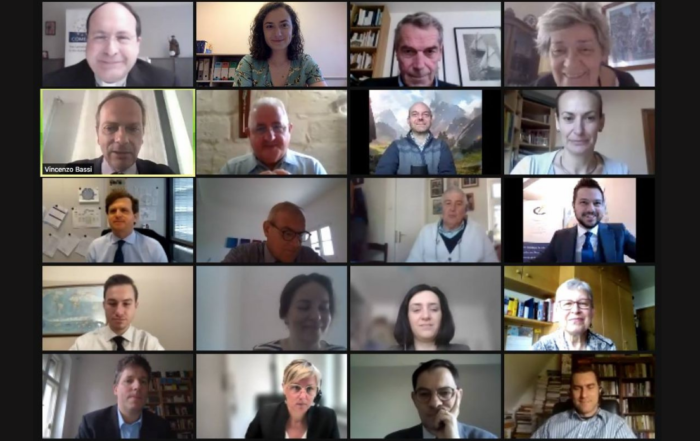
PRESS RELEASE | FAFCE Board Members adopt a Resolution on “The Family is the Democratic and Demographic Future of Europe”
Not only does the family constitute the first school of social and civic life by teaching children how to interact with others in a respectful and complementary manner based on compromise, it also affirms the importance of these values for parents and grandparents, who learn to make sacrifices for others and experience the unique freedom created through responsibility.

EU Parliament Approves Initiative on “Reversing demographic trends in EU regions using cohesion policy instruments”
25 May 2021, On Thursday, 20 May 2021, the European Parliament adopted a report on “Reversing demographic trends in EU regions using cohesion policy instruments" (Rapporteur: Daniel Buda, EPP, Romania). The report marks an

INVITATION | Webinar on Demographic Change and the Future of Europe (3 June 2021, 16.30-17.30 CEST)
The Federation of Catholic Family Associations in Europe, in cooperation with The EPP Working group 'Intercultural and religious dialogue' invites you to a Webinar on Demographic Change and the Future of Europe Thursday, 3

European Parliament Calls to Recognise the Role of the Family in the European Child Guarantee
Brussels, 12 May 2021 On March 24th, 2021, the European Commission published its proposal for a European Child Guarantee, a key part of the European Union’s effort to eliminate child poverty and social exclusion.

Launch of the Atlas of Demography, the EU database on Demography and Ageing in Europe
29 April 2021, The European Commission Vice-President Dubravka Suica (for Democracy and Demography), and Commissionner Mariya Gabriel (for Innovation, Research, Culture, Education and Youth) launched this morning the long awaited Atlas of Demography.

Recognition of Parenthood for Cross-Border Family Situations: FAFCE’s President urges President von der Leyen to protect the best interests of the child
27 April 2021, During her State of the Union address in September 2020, EU Commission President Ursula Von Der Leyen declared “if you are parent in one country, you are parent in

FAFCE Contributes to the Implementation of the EU’s Green Paper on Ageing
23 April 2021 On 21 April 2021, FAFCE contributed to the European Commission’s public consultation on the Green Paper on Ageing (click to download: FAFCE Contribution Green Paper on Ageing Questionnaire). The European Commission

FAFCE Contributes to European Commission Consultation on Stopping Online Child Sexual Abuse
FAFCE’s contribution seeks to offer to the Commission a comprehensive and cross-cutting legal framework for addressing all forms of online child sexual abuse and proposes five specific policies. Overall, the online protection of children must be a top priority of the European Union, in order to create a welcoming environment where children can learn, play, and have access to useful services while fully protected from the dreadful risks of online abuse.

UPDATE Freedom of education at stake in Spain: “#EuropaEscúchanos”
UPDATE: The Committee on Petitions (PETI) and the European Commission both considered the Ley Celaa during their last meetings. In their presentations, the five petitioners presented arguments to protect the freedom of education in
