Family
The Families are Europe’s Treasure. In this area of our web site we present some issues related to the Family and our activities in this field with facts and figures. The role of the Family today in the society with its values and actions for the society are surprised in this area.

Belgian Presidency Priorities
Brussels, 29 January 2024 On 1 January 2024, Belgium assumed the Presidency of the Council of the European Union. This is the 13th time Belgium has held the EU Presidency, the last time being in 2010. It takes over from Spain will be succeeded by Hungary which will take

PRESS RELEASE I Surrogate motherhood: it’s high time for a universal ban
In his address to the Diplomatic Corps, Pope Francis made an appeal along the same lines as the Casablanca Declaration, which will be the subject of an international conference in Rome on 5 and 6 April this year Brussels, 8 January 2024 The Federation of Catholic Family Associations in Europe

FAFCE Newsletter | We wish you a Merry Christmas!
The 21th of December 2023 Dear Friends, in few days, we will retreat with our respective families and turn our attention to the Holy Family, where the mystery of a Child God takes place. With this newsletter, we wish first of all to offer you our best Christmas wishes,

INVITATION | FAFCE Webinar on “The Family: antidote to loneliness, beyond the pandemic” (13 May 2021, 17.00 – 18.15 CEST)
The Federation of Catholic Family Associations in Europe (FAFCE) is happy to invite you to a webinar on The Family: antidote to loneliness, beyond the pandemic 13 May 2021 (17.00 - 18.15 CEST) - (18.00 - 19.15
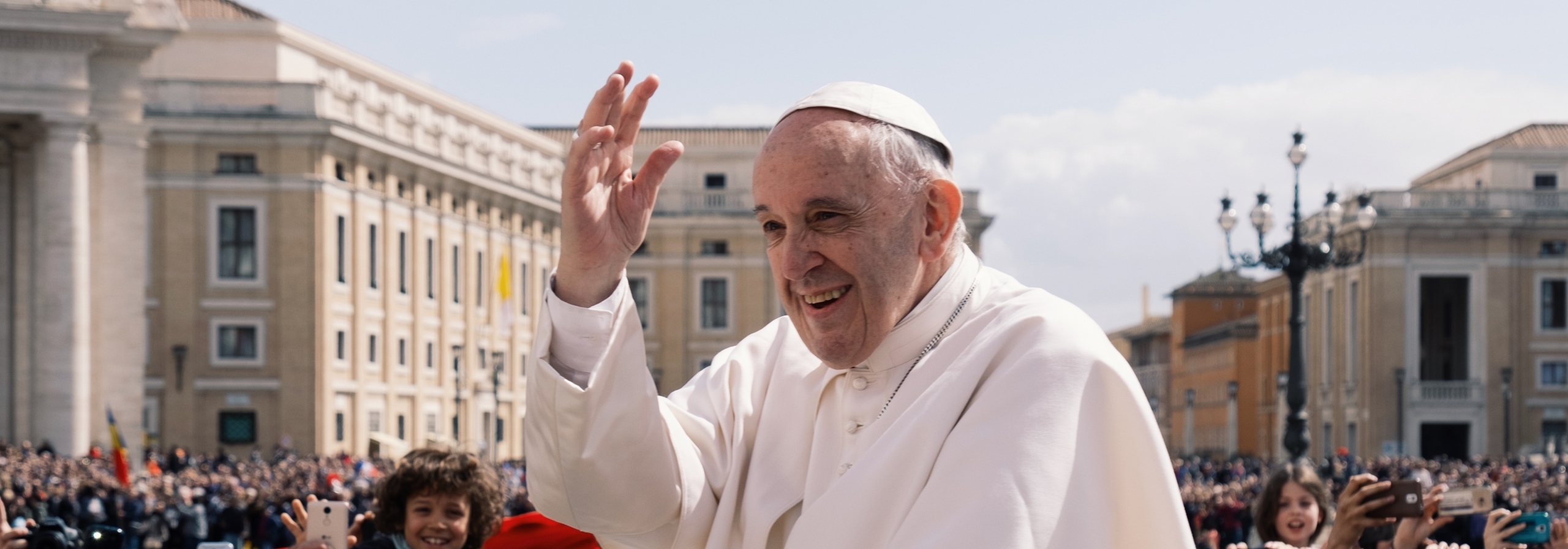
Pope Francis to Mark the Beginning of the Upcoming “States-General on Natality” In Rome
4 May 2021 On May 14th, Pope Francis will formally open the States-General on Natality, an online initiative devoted to the future of demography in Italy and in the world. This event will reverberate beyond Italy, especially in Europe, since

Launch of the Atlas of Demography, the EU database on Demography and Ageing in Europe
29 April 2021, The European Commission Vice-President Dubravka Suica (for Democracy and Demography), and Commissionner Mariya Gabriel (for Innovation, Research, Culture, Education and Youth) launched this morning the long awaited Atlas of Demography. Produced by the Joint

INVITATION | FAFCE – UNAEC-Europe Joint Webinar on “Family and Education: Seeds of Hope – Europeans and the Global Compact on Education” (4 May 2021 17.00 – 18.15 CET)
WEBINAR INVITATION FAFCE – UNAEC-Europe Joint Webinar Family and Education: Seeds of Hope Europeans and the Global Compact on Education 4 May 2021 (17.00 - 18.15 CETS) The Global Compact for Education “Calls for a commitment on the

Recognition of Parenthood for Cross-Border Family Situations: FAFCE’s President urges President von der Leyen to protect the best interests of the child
27 April 2021, During her State of the Union address in September 2020, EU Commission President Ursula Von Der Leyen declared “if you are parent in one country, you are parent in every country.” This statement is

FAFCE Contributes to the Implementation of the EU’s Green Paper on Ageing
23 April 2021 On 21 April 2021, FAFCE contributed to the European Commission’s public consultation on the Green Paper on Ageing (click to download: FAFCE Contribution Green Paper on Ageing Questionnaire). The European Commission had invited stakeholders and the
