Brussels, 15 July 2026
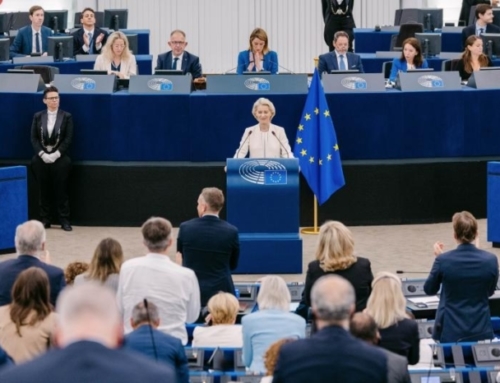
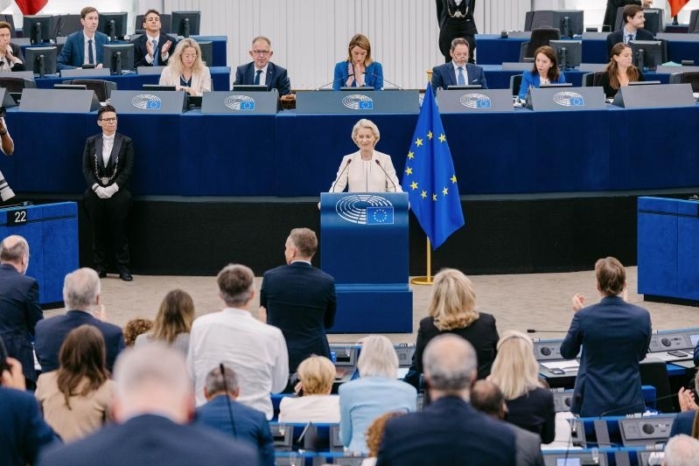
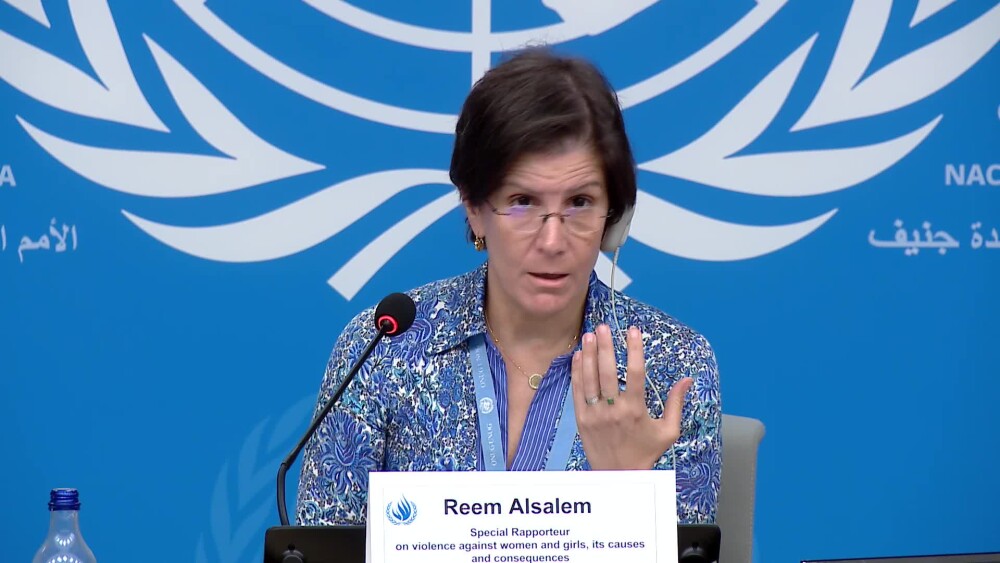
The United Nations Special Rapporteur on Violence against Women and Girls, Reem Al-Salem (from Jordan), was invited by the Subcommittee on Human Rights of the European Parliament. The Subcommittee chair, Mounir Satouri (Greens) expected that members would contribute to the debate “without taboos“.
You can watch the meeting through this link.
Since August 2021, Mrs. Alsalem, a former international civil servant, serves as the United Nations Special Rapporteur on violence against women and girls.
Mrs Alsalem explained that the surrogacy business is one of the industry that develops the most quickly, being valued at 15 billion USD in 2023. But there is a inconvenient fact : despite being committed to the hardship of pregnancy, surrogate mothers receive only 10 to 27% of the payment. Setting the debate on a purely legal tone, Mrs. Alsalem raised this question : does surrogacy allows States to fulfill their obligations regarding Women’s rights ? As the proper characteristic of surrogacy is not to conceive a child, but to create a contractual split beteen the mother and its baby, one can have serious doubts about the liability to women’s rights.
As a practical takeaway for the Committee’s members, Mrs. Alsalem presented a possible legal solution : the abolitionist model. Contrary to some beliefs, the abolitionist model is not a ban on surrogacy, but rather a way to effectively recognise the rights of surrogate mothers and their children. In that sens, the legal interdiction of surrogacy contracts is aimed at practically stopping surrogacy business.
Answering questions from MEPs, Mrs. Alsalem talked about the distinction between the surrogacy business and the so-called “altruistic surrogacy”. Explaining that, in countries where commercial surrogacy has been outlawed, there are actually few woman volunteering to become surrogate, a proof that the real incentive is the financial remuneration. On this basis, Mrs. Alsalem stated that there is no distinction between commercial surrogacy and the so-called “altruistic surrogacy”.
On the other hand, she drew some comparisons between surrogacy and prostitution, as there are the same actors, the same clients, the same victims, and in-between making profit of it. Therefore, Mrs. Alsalem proposed the same solution: the abolition in order to make demands useless, be it for a sexual prestation or for an ordering of children. But always keeping the victims at the highest importance, the Special Rapporteur underlined the fact that in no way an abolition should damage the victims’ rights, whether they are surrogate or children.
Finally, Mrs. Alsalem made a clear distinction between surrogacy and adoption. For an adoption, there are a lot of requirement criteria that the adopting couple have to meet, whilst there are no requirements for a commissioning party in a surrogacy contract.
With this very interesting hearing, FAFCE expresses its confidence that political groups will advance towards a cross-partisan support to ban surrogacy.
Mrs. Reem Al-Salem was also at the European Parliament a few months before as one of the guest speaker during a large gathering of NGOs called for a universal ban on reproductive exploitation.
We can only regret that the Women’s Rights committe have decided not to take part in this hearing, as the topic was fully in line with its core mission. FAFCE reiterates that the exploitation of women through surrogacy arrangements is one of the most scandalous backlash against women’s rights.
Since 2016, the Federation of Catholic Family Associations in Europe (FAFCE) calls for a worldwide abolition of surrogacy and condemns any form of surrogacy, which instrumentalises women and children, whether accompanied by a financial transaction or not.
Read also :