Strasbourg, the 7 October 2026
Across Europe, members of Catholic Family Associations have warned about the huge risks that children may encounter on social networks, most especially the danger of inappropriate content.
This is why FAFCE have advocated for an EU-wide binding legislation that would protect children from harmful content on the Internet while keeping the privacy of the user’s personal data.
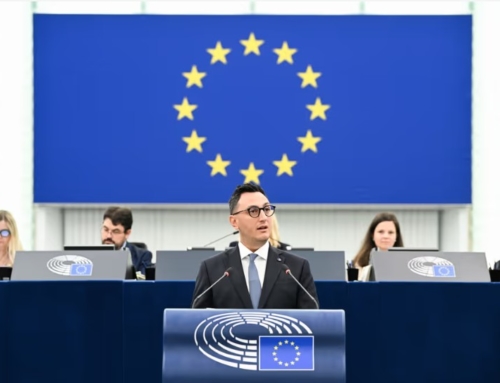
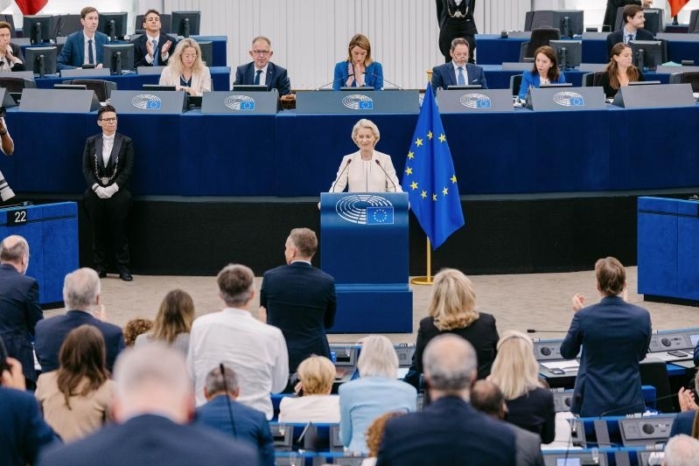
On September 16, the President of the European Commission gave her traditional “State of the European Union” speech to the Members of the European Parliament. In her address, Ursula von der Leyen announced the publication of a regulation, a legislative initative that would be legally binding in all EU-Member States :
“The Commission is proposing the EU KIDS ACT. We will take a gradual and differentiated approach. Each age has its own sensitivities. And therefore, each will have its own tailored protection level. No social media under the age of 13. No personal account under the age of 15. That means, from 13 until a child turns 15, only mini accounts set up and supervised by parents or guardians, with limited features and time restriction of one hour a day. And between 15 and 18, safe design will be an obligation for the platforms.”
With this proposal of regulation, the European Commissions aims to protect minors from risky digital services and to create an enforcement structure for the protection of minors online.
“I am aware that many perceive the power of big tech as overwhelming. And impossible to roll back. I disagree. We do not have to accept addictive features. We do not have to accept children being drawn into ever more extreme content. We do not have to accept that girls have their photos used for AI-generated sexualised images.” said President Ursula von der Leyen. “We are reversing the burden of proof. Platforms will have to prove to us that they are safe. Because it is not about our minors accessing social media. It is about when and how do we allow social media to access minors.”
You may read here to official proposal of regulation, nicknamed the “EU Kids Act”.
Regarding the role of parents, the regulation proposal states “In recognition of this important role of parents and guardians, the proposal mandates tools for guardians and provides the possibility for parents to set up accounts in a safe environment for 13-15 years old minors.”
The Commission President also mentioned the special panel of experts that was convened during the first semester of 2026 to discuss the prospect of an EU’s age verification app.
FAFCE expresses its satisfaction that the European Commission is taking the most direct legal tool (a regulation) to ensure a better protection for children. FAFCE has long been urging for effective age-verification measures and hopes that the Commission’s efforts for an harmonised EU approach will enhance closer cooperation between the governements and civil society organisations (including family associations). The target to be reached at both national and European level must be to mitigate the risks faced by children online, especially the harmful impact of pornography, which remains a critic public health issue.